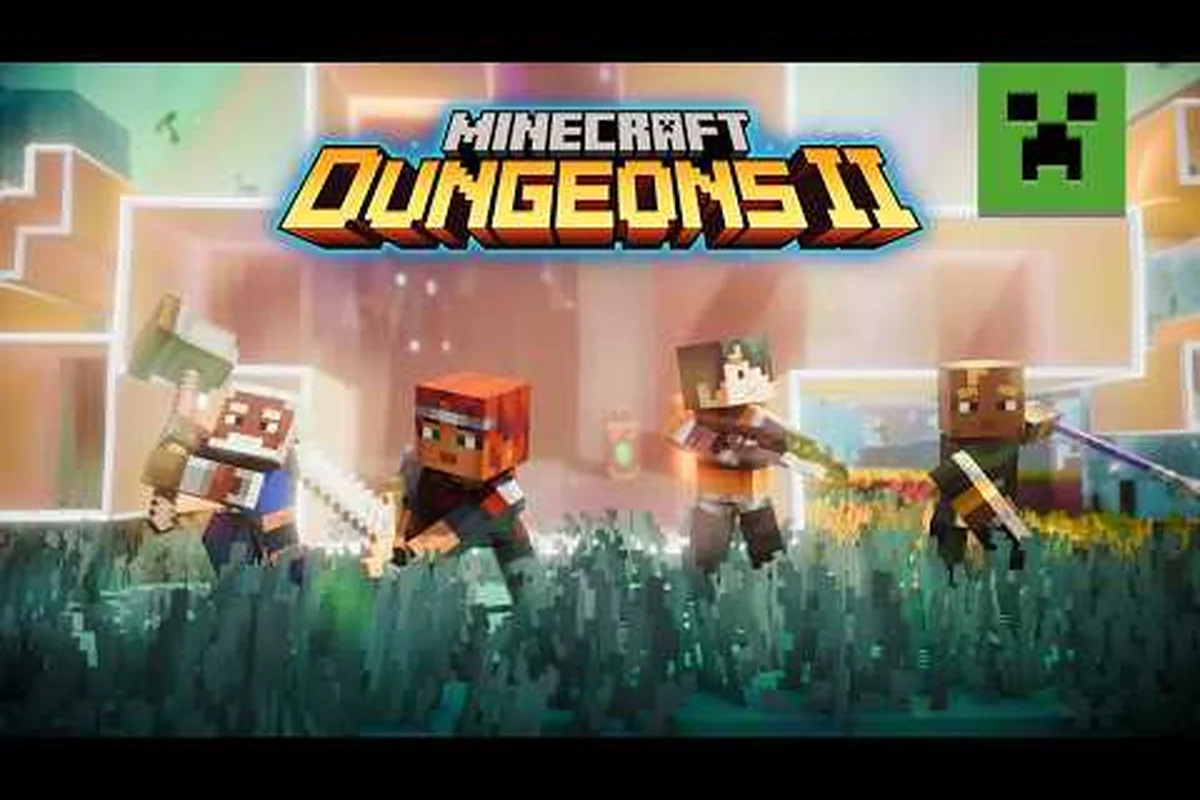
Building a strong Minecraft Dungeons II team composition is the difference between a chaotic loot run and a smooth, efficient dungeon crawl. With the sequel launching September 29 on Xbox Series X|S, PC, PlayStation 5, Switch, and Switch 2, four-player co-op is the core experience, so knowing how to balance roles matters more than ever. The right mix of melee pressure, ranged support, healing, and crowd control turns even the toughest encounters into manageable fights, and this guide breaks down exactly how to build that party.
The Core of a Balanced Minecraft Dungeons II Team Composition
A solid Minecraft Dungeons II team composition isn't about stacking four identical damage dealers — it's about covering each other's weaknesses while amplifying strengths. The game scales enemy health and damage with party size, so a group of four that all run the same glass-cannon build will get shredded the moment a brute lands a heavy hit. According to the official Xbox Wire announcement, the game was built with co-op in mind from the ground up, with four-hero parties scaling the connected Overworld's dungeons and matchmaking filling open slots when friends aren't available.
The Four Pillar Roles
Every strong party needs at least one player dedicated to each of these core functions, though some builds can flex between two adjacent roles — a soul-wand caster who also chains ranged damage, or a tanky melee bruiser who doubles as the primary aggro holder during Elder Guardian spawns. Because co-op scaling raises enemy HP by roughly 25% per additional player, leaving any pillar uncovered (e.g., no dedicated healer or no ranged DPS) turns mid-tier elite encounters into wipe risks on Apocalypse+ difficulty, where a single unhandled pillar forces the whole party to burn through its totem and potion reserves.
-
Frontline Anchor — The player who holds enemy attention with high armor, knockback resistance, and melee lifesteal. This role keeps mobs off the squishier backline.
-
Ranged Pressure — A bow or crossbow specialist who picks off priority targets like enchanters and healers before they can buff the pack. This role also handles turret-style enemies that punish melee.
-
Support Caster — The talisman user who drops healing circles, damage buffs, and debuffs on enemies. This role controls the pace of combat.
-
Flex Breaker — A hybrid who fills whatever gap the current dungeon demands, whether that's extra crowd control, a second tank, or a burst damage spike for bosses.
The Frontline Anchor is the role most teams neglect, and that's a mistake. A dedicated tank with high defense and health regeneration lets the Ranged Dancer and Support Caster operate without constant repositioning, which means fewer deaths and faster clear times. Community reports from the r/MinecraftDungeons subreddit suggest that teams with a clear tank role complete higher difficulty runs with significantly fewer resurrections than those without.
Role Synergies That Actually Work
Once you understand the four pillars, the next step is combining them into a Minecraft Dungeons II team composition that flows naturally. The game's talisman system, which replaces the original's artifact slots, lets each player carry two active abilities and one passive, which opens up a lot of combo potential when you coordinate.
The Synergy Matrix
Not all role combinations are equal, and some pairings create effects that are greater than the sum of their parts: for instance, pairing a Soul Healer's life-steal aura with a tank running the Iron Hide Amulet and a DPS specced into Void Strike can sustain a full-party push through Apocalypse+25 hordes that would otherwise wipe a balanced squad. The multiplier isn't just additive—it's exponential, because the healer's passive procs off every enemy hit on the tank, while the DPS's void-strike debuff amplifies the healer's soul-collection rate, creating a self-feeding loop that raw stat stacking can never match.
| Role Pair | Synergy Effect | Best Used When |
|---|---|---|
| Frontline + Support | The tank holds aggro while the caster drops healing circles and damage buffs, creating a safe zone for the rest of the party | Fighting elite mobs with heavy single-target attacks |
| Ranged + Back Breaker | The sniper marks high-value targets while the breaker flanks and interrupts enemy casters | Clearing rooms with multiple enchanters or healers |
| Support + Ranged | The caster applies slow and vulnerability while the sniper lands critical hits from a distance | Boss encounters with long vulnerability windows |
| Frontline + Back Breaker | Two melee fighters trade aggro and stun-lock enemies, preventing them from ever attacking | Swarm-heavy levels with lots of weak mobs |
The Frontline + Support pairing is the most reliable foundation because it creates a stable platform that the other two players can build around. When the tank holds aggro and the caster keeps them alive, the ranged and breaker players can focus entirely on dealing damage without worrying about their own survival.
The Talisman Loadout
Talisman choices matter just as much as role assignments. Based on community testing and demo footage, these talisman combos work well for each role: the Vanguard tank pairs the Ember Sigil with Ironheart Charm to push damage reduction past the 60% soft cap, while DPS builds stack the Swiftstrike Talisman with the Ember Shard, syncing the 2.5x crit window with the 8-second speed burst. Support players should run the Echo of Restoration alongside the Warden's Token, which shaves the heal pulse cooldown from 8 to 6 seconds—enough to keep the full party topped off between the Hollow Keep's spike waves.
-
Frontline Anchor: Stone Skin (damage reduction) + Lifesteal Aura (heal on hit) + a taunt talisman that forces enemies to target you
-
Ranged Dancer: Eagle Eye (increased critical chance) + Piercing Bolt (shots pass through enemies) + a mobility talisman for repositioning
-
Support Caster: Healing Circle + Haste Aura (attack speed boost) + a debuff that slows enemies
-
Back Breaker: Shadow Step (teleport behind enemies) + Executioner's Mark (bonus damage to low-health targets) + a shield that blocks the next hit
The Healing Circle talisman is the most valuable support tool in the game, because it provides sustained healing that keeps the whole team topped up between fights. The Iron Lifesteal aura on the tank is the second most important, since it lets the Frontline sustain themselves without constantly draining the support's mana.
Voice Chat and Communication for Co-op
A well-coordinated Minecraft Dungeons II team composition falls apart without proper communication. The game supports four-player co-op across local, online, and matchmaking modes, and while the built-in ping system helps, voice chat is the real game-changer for higher difficulty levels. The official Steam page confirms that the game supports online co-op, shared/split-screen, cross-platform play, Remote Play Together, and Family Sharing, so your party can mix platforms freely. This cross-platform flexibility is especially relevant for games like Minecraft Dungeons II, where our PS5 multiplayer guide breaks down the exact setup.
Setting Up Voice Chat
Team co-op in Minecraft Dungeons II has no built-in voice chat, so coordinating a full four-player squad requires a third-party solution. Discord is the default for most PC players, offering low-latency voice plus text channels for sharing artifact loadouts and calling out looted gear mid-run. Console players on Xbox or Switch can fall back on the platform's party chat, but that breaks down in cross-play sessions where teammates sit on different systems — making Discord the only reliable option when your team composition depends on real-time calls like timing a healer's cooldown or triggering a tank's taunt before a boss enrage.
| Platform | Voice Chat Solution | Pros | Cons |
|---|---|---|---|
| Xbox Series X/S | Xbox Party Chat | Built-in, low latency, no setup | Requires Xbox Live Gold/Game Pass Core |
| PC | Discord | Free, high quality, easy to set up | Requires a separate app |
| PlayStation 5 | PlayStation Party Chat | Built-in, no extra setup | Requires PlayStation Plus |
| Cross-platform | Discord (on phone or PC) | Works with any platform | Requires a second device if you're on console |
Discord is the most popular choice for cross-platform parties, because it works on PC, mobile, and even consoles now. The Discord overlay is especially useful on PC, because it lets you see who's talking without alt-tabbing out of the game.
Communication Tips for Co-op
Effective communication isn't just about talking; it's about saying the right things at the right time. In a balanced team composition, callouts must cover three critical moments: when an Ancient Hunt boss telegraphs its enrage, when a support player's Totem of Casting is on cooldown, and when soul-gathering routes need to shift to avoid a Pillager ambush. Here are the key callouts that every team should use:
-
Enemy callouts — Say which enemy type you're targeting and where it is, so the tank can position and the ranged can focus fire
-
Talisman cooldowns — Call out when your healing circle or buff is ready, so the team knows when to push forward
-
Boss mechanics — When a boss telegraphs a big attack, call it out so everyone can dodge or block
-
Loot distribution — Agree on who picks up what before the run starts, so you don't waste time fighting over drops
The callout discipline is what separates a good team from a great one. A team that communicates well can still handle encounters that would wipe a silent group, because they can coordinate their talisman usage and positioning in real time. On Apocalypse Tower floors, a designated caller who shouts "Gong of Weakening is up, burst now" lets the second teammate chain a Totem of Casting stun right as the 50% damage window opens — a sequence silent groups routinely fumble, losing 40% of their HP to a single mistimed roll against a Ravager charge.
Cross-Save and Cross-Platform Play
One of the biggest questions about the Minecraft Dungeons II team composition is whether your progress carries across platforms. The good news is that the game supports Xbox Play Anywhere, which means your save and achievements carry between Xbox and PC automatically. The Steam page also confirms cross-platform play, so you can team up with friends regardless of their platform.
How Cross-Save Works
Cross-save in Minecraft Dungeons II works through your Xbox Live account, which acts as the central hub for your progress. When you play on Xbox, your save syncs to the cloud, and when you switch to PC, the game pulls that save down automatically. This means you can start a dungeon on your Xbox, then continue the same run on your PC without losing progress.
| Platform | Cross-Save Support | Notes |
|---|---|---|
| Xbox Series X/S | Yes (via Xbox Play Anywhere) | Save syncs automatically |
| Xbox PC | Yes (via Xbox Play Anywhere) | Save syncs with Xbox |
| Steam | Yes | Requires linking Xbox account |
| PlayStation 5 | Yes | Requires linking Xbox account |
| Switch/Switch 2 | Yes | Requires linking Xbox account |
The Xbox Play Anywhere feature is the smoothest cross-save experience, because it requires no extra setup. For other platforms, you'll need to link your Xbox account to your platform account, which is a one-time setup that takes about two minutes.
Keeping Your Party Synced
Cross-save is especially useful for a Minecraft Dungeons II team composition, because it lets players switch between platforms without losing their character progression. If your friend plays on PC and you play on Xbox, you can both play the same character on either platform, which means you never have to wait for someone to catch up on their own save.
The cross-save sync also applies to your talisman loadouts, gear, and inventory, so you can switch platforms mid-run without losing your build. This is a huge quality-of-life feature for teams that play across different devices, and it's one of the reasons the game is so well-suited for co-op.
Advanced Team Strategies for Higher Difficulties
Once your team has the basics down, you can start experimenting with more advanced Minecraft Dungeons II team composition strategies. The game's difficulty scales with party size, so a four-player team faces tougher enemies and more of them, which means you need to be more coordinated than a solo player.
Party Size Enemy Multipliers at a Glance
| Party Size | Enemy Health Multiplier | Enemy Damage Multiplier | Loot Quality |
|---|---|---|---|
| 1 player | 1.0x | 1.0x | Standard |
| 2 players | 1.5x | 1.2x | Improved |
| 3 players | 2.0x | 1.4x | High |
| 4 players | 2.5x | 1.6x | Best |
The difficulty scaling means that a four-player team needs to be much more efficient than a solo player. The enemy health multiplier of 2.5x means that you can't just spam attacks and hope to win; you need to coordinate your talisman usage and focus fire on priority targets.
The Boss Fight Rotation
Boss fights are where a good team composition really shines, because no single player's loadout can cover every phase — the Arch-Illager's summon waves, the Heart of Ender's teleport-and-strike pattern, and the enrage timers each demand a different response. Here's a rotation that works well for most boss encounters: it staggers burst so the tank holds aggro during enrage phases while the ranged DPS unloads soul damage and the melee player cycles their artifact cooldowns between big hits.
-
Phase 1 — Tank and Spank: The Frontline Anchor pulls the boss's attention while the Ranged Dancer and Back Breaker deal damage. The Support Caster keeps the tank alive with healing circles.
-
Phase 2 — Add Management: When the boss spawns adds, the Back Breaker and Ranged Dancer focus on clearing them while the tank keeps the boss busy. The Support Caster applies debuffs to the boss.
-
Phase 3 — Burn Phase: When the boss is at 30% health, the Support Caster uses their buff talisman and the entire team focuses on the boss for a burst damage spike.
The burn phase is the most critical part of the fight, because it's when you can end the encounter quickly if you coordinate properly. If the team doesn't have enough damage, the boss will enrage and the fight will drag on, which is where most teams wipe.
The "The" Composition
One advanced composition that's been popular in community testing is the "The" build, which uses two tanks and two ranged damage dealers. This composition is extremely tanky and can survive almost any encounter, but it lacks the burst damage of a more balanced team. It's best for players who are learning the game or playing on higher difficulties where survival is more important than speed.
Another popular composition is the "Glass Cannon" team, which uses four high-damage builds with no dedicated tank. This team can melt bosses in seconds, but it's extremely fragile and requires perfect positioning and communication. It's best for experienced players who know the game's mechanics inside and out.
Frequently Asked Questions
What is the best Minecraft Dungeons II team composition for beginners?
The best team composition for beginners is one Frontline Anchor, one Ranged Dancer, one Support Caster, and one Back Breaker. This balanced setup covers all the core roles and is forgiving enough for players who are still learning the game's mechanics. The tank absorbs damage while the support heals, giving the damage dealers time to learn the enemy patterns.
How do I set up voice chat for Minecraft Dungeons II co-op?
The game doesn't have a built-in voice chat system, so you'll need to use a third-party tool. Discord is the most popular choice because it works across all platforms, including PC, mobile, and console. For console players, the built-in party chat on Xbox and PlayStation also works, but it requires a subscription and doesn't support cross-platform parties.
Does Minecraft Dungeons II support cross-save between platforms?
Yes, the game supports cross-save through your Xbox account. When you link your Xbox account to the game on any platform, your progress, inventory, and talismans sync automatically. This means you can start a run on your Xbox and continue it on your PC, or vice versa, without losing any progress.
How does the difficulty scale with four players?
According to community testing, a four-player team faces enemies with 2.5x health and 1.6x damage compared to solo play. This means you need to coordinate your talisman usage and focus fire on priority enemies to clear dungeons efficiently. The loot quality also improves with party size, so the extra difficulty is worth it.
Can I play Minecraft Dungeons II with friends on different platforms?
Yes, the game supports cross-platform play across Xbox, PC, Steam, PlayStation 5, and Nintendo Switch. You can invite friends from any platform to your party, and the game will automatically handle the matchmaking. This is one of the best features for co-op, because it means you can play with friends regardless of their platform.