
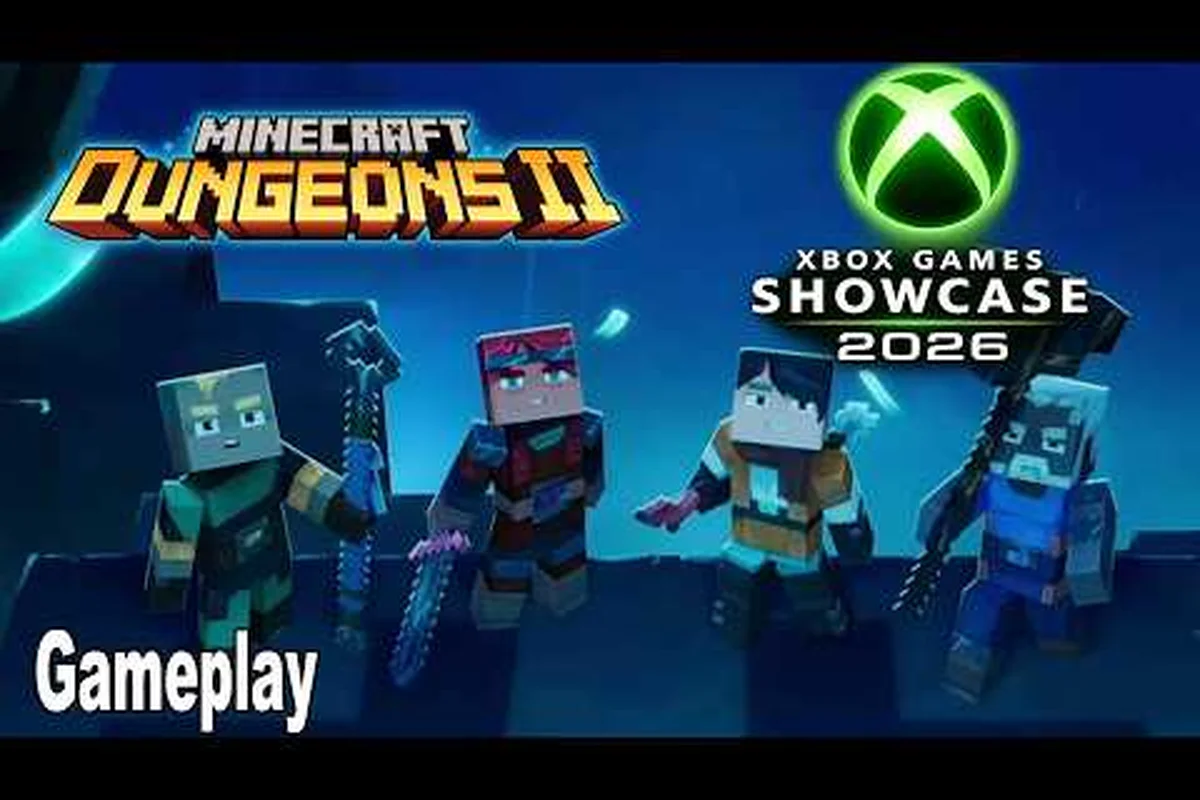
Starting a new action RPG can feel overwhelming, but the Minecraft Dungeons II beginner guide boils down to three verbs: jump, loot, and build. Unlike the first game, this sequel drops you into a connected Overworld where every chest, enemy, and gear drop teaches you something essential. Get the fundamentals right in your first session, and you will save hours of frustration later.
The Connected Overworld: Your First Playground
The biggest shift from the original Minecraft Dungeons is the connected Overworld design. Instead of picking isolated missions from a map screen, you now explore a single, contiguous world dotted with dungeons to conquer. According to the official Xbox Wire preview, this fixed and interconnected world makes exploration feel more like a traditional adventure game than a mission-based dungeon crawler.
What This Means for New Players
Because the world is connected, you can wander off the critical path and find hidden loot, secret caves, and optional bosses. This is a game guide that rewards curiosity, so do not rush straight to the objective marker. The jump ability is your best friend here, letting you scale cliffs and reach treasure stashes that ground-bound heroes would miss.
| Overworld Feature | What It Does | Why Beginners Care |
|---|---|---|
| Connected Zones | No mission select; walk between areas | You learn the map naturally |
| Jump Ability | Tactical vertical movement | Unlocks hidden loot routes |
| Dynamic Lighting | Dappled sunlight and sculk glow | Visual cues mark secrets |
| Dungeon Entrances | Marked by distinct architecture | Clear goals for exploration |
The enhanced lighting engine does more than look pretty. The sculk bioluminescence and dappled sunlight actually help you spot hidden paths and chests at a distance. When you see a patch of glowing vines, check behind it for a cave entrance. If you want a deeper look at the world structure and how long the campaign stretches, the campaign length guide breaks down the pacing of each region.
2. The Six-Slot Gear System Explained
Here is the heart of the Minecraft Dungeons II strategy guide: there are no classes. Your build comes entirely from the gear you equip, which fills six equipment slots that define your hero. The Xbox Wire demo report confirms this design, and it is the single most important concept for new players to internalize.
The Equipment Slots
| Slot | What It Holds | Example |
|---|---|---|
| Melee Weapon | One primary weapon | Sword, axe, hammer |
| Ranged Weapon | One secondary weapon | Bow, crossbow |
| Artifact 1 | Active ability | Healing totem, shockwave |
| Artifact 2 | Active ability | Summon, shield |
| Artifact 3 | Active ability | Utility or burst damage |
| Armor Set | Four pieces | Helmet, chest, legs, boots |
| Talisman | Passive bonus | Bone dog, regen charm |
Wait, that is actually seven rows, but the official breakdown groups armor into four pieces that count as one gear category. The six-slot system refers to melee, ranged, three artifacts, and armor, while the three talisman slots are a separate passive layer. For a beginner, the practical takeaway is simple: every piece of gear you pick up changes how you play.
Why No Classes Helps Beginners
Because there is no class selection, you are never locked into a role you might regret. If you find a great ranged weapon, you can pivot to a bow-focused build without restarting. This flexibility makes the Minecraft Dungeons II starter guide feel forgiving, since your build evolves naturally from the loot you find rather than from a permanent choice you made at character creation.
3. Your First Loadout: Melee, Ranged, and Artifacts
When you begin, the game will hand you basic gear quickly. The first hour is about learning the rhythm of combat, so do not overthink your loadout. The official Steam page notes that new heroes start by picking a skin-free hero and then learning hack-and-slash combat against returning mobs like slimes, skeletons, spiders, and illagers.
Melee First, Ranged Second
Start with a melee weapon as your primary damage source because it has no ammo limit and teaches you enemy attack patterns. Keep a ranged weapon in the second slot for picking off distant skeletons and slimes before they reach you. The Tornado Blade, teased by Mojang as an enchantable weapon, is a great early goal because its spinning attack clears crowds.
Artifacts: Your Active Abilities
Your three artifact slots are your active abilities, and they can save your life. For the first few levels, equip one healing artifact, one damage artifact, and one utility artifact. This balanced approach lets you experiment with each type without committing to a playstyle you have not tried yet. The Enchantsmith lets you upgrade gear later, so do not worry about wasting resources on early items.
The Bone Talisman: Your First Passive
The Bone Talisman stands out as the friendliest early passive for solo players, according to the Xbox Wire preview. It summons a dog that fights alongside you, which means you have a second body absorbing hits and dealing damage. Grab one as soon as you can, because it makes the early game significantly easier.
4. Combat Basics and Enemy Behavior
Understanding how enemies behave is the core of the Minecraft Dungeon II strategy guide. The returning mobs from the first game have familiar patterns, but the new Overworld layout changes how you approach them. Here is a quick reference table for the common early enemies.
| Enemy | Behavior | Counter-Strategy |
|---|---|---|
| Slime | Splits into smaller slimes | Kill with ranged before it gets close |
| Skeleton | Shoots arrows from distance | Close the gap and use melee |
| Spider | Jumps and attacks fast | Dodge then strike after the jump |
| Illager | Uses crossbows and axes | Use artifacts to break its rhythm |
Combat Fundamentals
The jump mechanic is not just for exploration; it is a combat tool. You can jump over a slime's attack, dodge a skeleton's arrow, and reposition for a backstab. Practice the jump-and-strike rhythm, because it will carry you through the entire game. When you face a group, use your ranged weapon to soften them up, then jump in with melee to finish them off.
When to Retreat
There is no shame in retreating in this game. If you see a group of illagers with crossbows, back off and use your ranged weapon to thin the group. The connected Overworld gives you plenty of space to kite enemies, and the Bone Talisman will hold the line while you reposition. Learning when to retreat is a core skill that separates smooth runs from repeated deaths.
5. Co-op Play: Learning Together
Minecraft Dungeons II supports up to four players via online or split-screen co-op, according to the Steam store page. If you have friends who also want to learn the Minecraft Dungeons II game guide, playing together is the fastest way to understand the mechanics.
How Co-op Changes the Game
In co-op, you can divide the six gear slots across your group. One player focuses on melee, another on ranged, and a third on artifacts. This lets you experiment with different builds without needing to find all the gear yourself. The Bone Talisman becomes even stronger in co-op because the dog can distract enemies while your team focuses on a single target.
Communication Is Key
The connected Overworld is large, and it is easy to split up. Use voice chat or the ping system to mark dungeons and loot. If you are playing with strangers, follow the player who seems to know where they are going. The jump ability also lets you reach different paths, so coordinate who takes the high road and who takes the low road to cover more ground.
5. Progression and What to Do Next
Once you have your first loadout and have cleared a few dungeons, you will start to see the progression loop. The game will throw better gear at you, and you will need to decide what to keep and what to salvage. This is where the Minecraft Dungeons II game guide gets interesting, because your choices now affect your late-game power.
According to the official Xbox announcement, the game shifts toward a deeper ARPG structure with revamped loot progression and class-based mechanics that beginners should prioritize learning early.
The Enchantment Loop
The Enchantsmith lets you add enchantments to your gear, and this is where the real power lies. A basic sword with a good enchantment can outperform a rare sword with no enchantment. Focus on enchantments that match your playstyle. If you are aggressive, look for damage and attack speed. If you are defensive, look for healing and damage reduction.
When to Upgrade
Do not upgrade your gear every time you find something new. Instead, wait until you find a piece that fits your build. The Tornado Blade is a great example of a weapon worth upgrading because its unique effect scales well. For a deeper dive into which enchantments are worth your resources, check out the best enchant guide.
The Long Game
The connected Overworld means you will revisit areas as you get stronger. Early dungeons that felt hard will become farming routes for better gear. The difficulty levels will also ramp up, so you will need to keep your build updated. If you want to know what the endgame looks like, the late game guide breaks down the progression curve and what to expect after the first few hours.
Frequently Asked Questions
What is the first thing I should do in Minecraft Dungeons II?
Start by exploring the connected Overworld and learning the jump mechanic. Equip your first melee and ranged weapons, then grab the Bone Talisman early. Focus on clearing the nearest dungeon to get better gear, and do not worry about optimizing your build yet.
How many gear slots do I have in Minecraft Dungeons II?
You have six main equipment slots: one melee weapon, one ranged weapon, three artifact slots, and armor. Additionally, you have three talisman slots for passive bonuses. This means you have a lot of flexibility, and your build is entirely determined by the gear you equip.
Is the Bone Talisman really the best early passive?
Yes, for solo players, the Bone Talisman is the best early passive because it summons a dog that fights for you. It provides extra damage and absorbs hits, making it much easier to survive early dungeons. It is especially valuable if you are learning the game without a co-op partner.
Can I change my build later?
Absolutely. Since there are no classes, you can change your build at any time by swapping gear. The game encourages experimentation, so feel free to try different weapons and artifacts. The Enchantsmith allows you to upgrade gear, but you can also salvage it for resources.
How long does it take to finish the campaign?
The campaign length depends on how much you explore the connected Overworld. A focused run through the core dungeons is shorter, while a thorough playthrough that experiments with the six-slot gear system, artifact actives, and talisman passives takes considerably longer. The campaign length guide breaks down the time per district.