
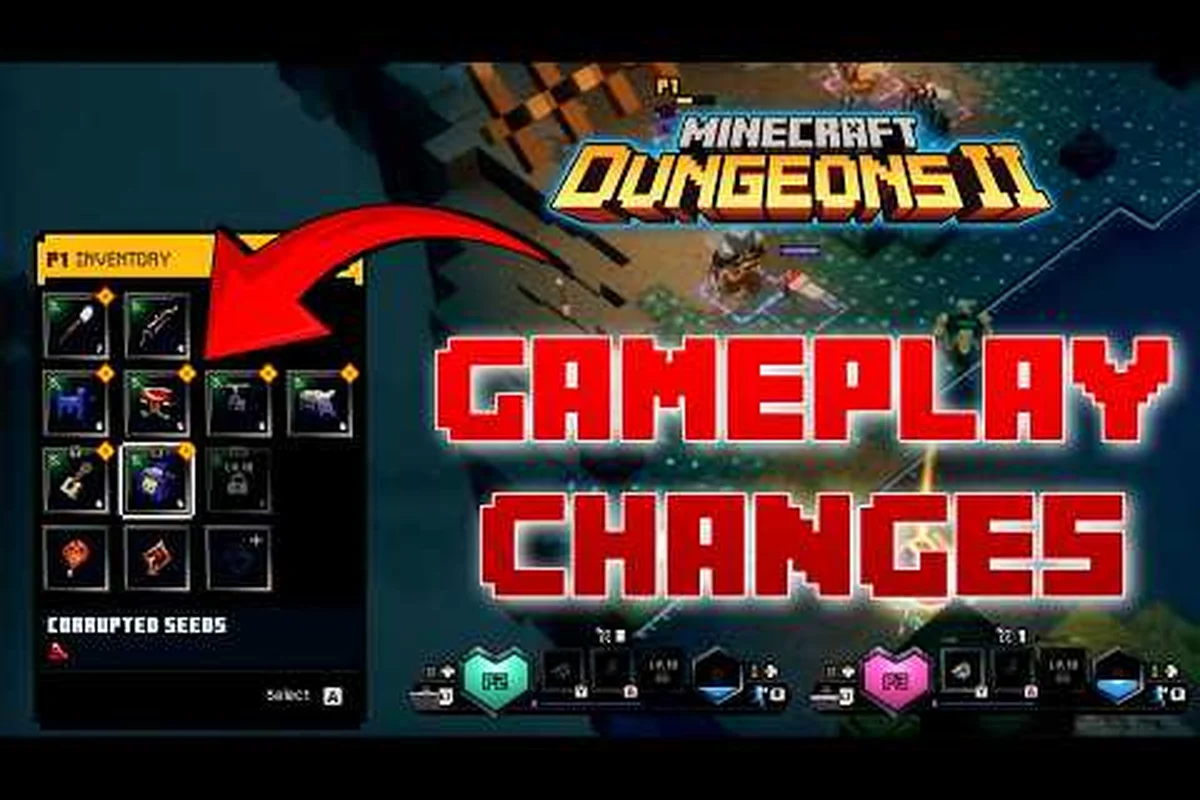
The Minecraft Dungeons II gear guide starts with a single truth: your hero is whatever you equip. There are no classes, no skill trees, and no stat points to allocate — the six equipment slots on your character sheet define everything from your damage output to your survivability. This is the most important shift from the original game, and understanding it early will save you hours of wasted grinding. The sequel replaces the single armor slot with four separate armor pieces, adds three artifact slots for active abilities, and introduces three talisman slots for passive bonuses. If you want to build a character that can actually survive the Nether and the Rifts, you need to know exactly how this gear system works before you start collecting loot.
For a detailed breakdown of the new gear mechanics, the official Xbox announcement offers an in-depth look.
The Six Equipment Slots That Define Your Build
No-Class Loadouts: How Six Slots Replace the Skill Tree
Steam's listing confirms Minecraft Dungeons II has no class selection step — your entire identity is decided at the equipment screen. With one melee weapon, one ranged weapon, three artifact slots, four armor pieces and three talisman slots, the Tornado Blade example shows how a single melee weapon, enchantable at the Enchantsmith, anchors a build. With no skill tree, swapping any one of the six pieces redefines your loadout more than any class pick did in the 2020 original.
Talisman Theorycrafting: Three Passive Slots, One Build Identity
r/MinecraftDungeons is already running talisman theorycrafting from demo footage, pairing the three passive slots with the three active artifact slots. A typical community setup: two defensive talismans plus one offensive one to complement a Tornado Blade melee build. Since there is no class system, these three passive slots carry the loadout's identity — the same role enchantments played in the 2020 original. The Steam page's emphasis on legendary gear confirms talisman choice is a primary build-defining decision at the equipment screen.
The foundation of any Minecraft Dungeons II gear guide is the slot layout itself. According to the hands-on report from Xbox Wire, every hero carries exactly six pieces of equipment: one melee weapon, one ranged weapon, three artifacts for active abilities, and four individual armor pieces that replace the single armor slot from the 2020 original. That adds up to a total of nine distinct slots when you count the three talisman slots for passive bonuses. The key insight is that your build identity comes entirely from what you equip, not from a class selection screen.
| Equipment Slot | Quantity | Function | Example |
|---|---|---|---|
| Melee Weapon | 1 | Primary close-range damage | Sword, Axe, Hammer |
| Ranged Weapon | 1 | Long-range damage and utility | Bow, Crossbow, Longbow |
| Armor Pieces | 4 | Defense, health, and set bonuses | Helmet, Chestplate, Leggings, Boots |
| Artifact Slots | 3 | Active abilities with cooldowns | Totem, Orb, Beacon |
| Talisman Slots | 3 | Passive bonuses and stat boosts | Charm, Rune, Sigil |
The melee weapon slot is your bread and butter for most encounters, but the ranged weapon gives you the ability to pick off enemies from a distance or trigger environmental traps. The four armor pieces are the biggest change from the original game, and they deserve their own deep dive. The three artifact slots hold your active abilities — think of them as your spells or gadgets. Finally, the three talisman slots provide passive bonuses that can dramatically alter your playstyle.
This system means that two players with the same weapon can play completely differently based on their armor and artifact choices. The melee weapons guide breaks down the full arsenal, but the core takeaway is that your gear is your class. A player with heavy armor and a slow hammer plays like a tank, while a player with light armor and a fast dagger plays like a rogue — and neither one has to pick a class to do it.
The Four Armor Pieces and the New Armor System
Four Armor Pieces vs. One Slot: The Mix-and-Match Defense
Xbox Wire's demo report and Wikipedia both confirm four separate armor pieces replace the 2020 original's single armor slot, expanding mix-and-match defense building. Each piece carries independent stats, letting you stack a heavy defensive piece with lighter ones to tune damage reduction per encounter. The pre-order Twisted cape hints at a cosmetic layer sitting above these four pieces. This modularity is the sequel's biggest structural change to defense, and it pairs directly with the three talisman slots for passive mitigation.
The Improved Inventory Menu: QoL Fixes for Gear Hoarding
Wikipedia notes the sequel's improved inventory menu and quality-of-life features directly address the 2020 original's most common complaint: gear management. With six equipment slots, four armor pieces, three artifacts and three talismans per loadout, the inventory must handle far more items than before. The revamped menu streamlines comparing and swapping pieces, letting you quickly test a Tornado Blade against your current melee weapon. This QoL pass is what makes the sequel's expanded gear system feel manageable instead of cluttered.
The biggest mechanical shift in the Minecraft Dungeons II armor system is the replacement of the single armor slot with four separate pieces. In the original game, you had one armor item that determined your entire defensive profile. Now, you have a helmet, chestplate, leggings, and boots, each with its own stats and potential set bonuses. According to Wikipedia's coverage of the sequel, this change was made to address a common complaint about the original's limited gear management, and it opens up far more mix-and-match possibilities.
| Armor Piece | Primary Stat | Secondary Stats | Set Bonus Potential |
|---|---|---|---|
| Helmet | Health bonus | Cooldown reduction, damage resistance | Yes |
| Chestplate | Defense rating | Damage reduction, health regen | Yes |
| Leggings | Movement speed | Stamina, dodge chance | Yes |
| Boots | Mobility | Jump height, speed boost | Yes |
Each armor piece has a base stat that scales with its power level, and you can find pieces with additional modifiers that roll randomly. The four armor slots system means you can mix and match pieces from different sets, which creates a huge number of possible combinations. For example, you could wear a helmet from a defensive set, a chestplate from a speed set, and leggings and boots from a balanced set to create a hybrid build that no single set could provide.
The set bonus system adds another layer of depth. If you wear two or four pieces from the same set, you unlock bonus effects that can dramatically change your playstyle. According to community reports, the full set bonus is often worth building around, but the flexibility of mixing pieces can be more valuable for certain builds. The armor system in the sequel is designed to reward experimentation, and players who stick to a single set for the entire game are missing out on the synergy potential.
Weapons List and Ranged Options
The Minecraft Dungeons II weapons list is extensive, and the sequel adds several new weapon families alongside returning favorites. The melee weapons range from fast daggers to slow but powerful hammers, while the ranged weapons include bows, crossbows, and longbows with different firing patterns. According to the Steam page, the game's character building revolves entirely around equipping legendary gear, with no class selection step, so your weapon choice is the first and most important decision you make.
| Weapon Type | Speed | Damage | Best For |
|---|---|---|---|
| Dagger | Fast | Low | DPS builds, status effects |
| Sword | Medium | Medium | Balanced play, beginners |
| Axe | Slow | High | Heavy damage, armor breaking |
| Hammer | Very Slow | Very High | Crowd control, stun |
| Bow | Medium | Medium | Ranged DPS, mobility |
| Crossbow | Slow | High | Burst damage, piercing |
| Longbow | Very Slow | Very High | Sniper builds, crits |
The weapons list includes unique variants with special abilities, and the Enchantsmith allows you to add enchantments to your gear. The Tornado Blade is one of the weapons teased in the pre-order trailer, and it appears to have a unique spinning attack that can hit multiple enemies at once. For a complete breakdown of every weapon family, the melee weapons guide has the full list with stats and build recommendations.
The ranged weapon is not just a secondary tool — it's essential for dealing with flying enemies, triggering pressure plates from a distance, and softening up tough enemies before you engage in melee. The crossbow is particularly strong for burst damage, while the longbow rewards patient players who can land headshots. The bow is the most versatile option, with a good balance of speed and damage.
Artifact Slots and Talisman Slots
The three artifact slots are your active abilities, and they are the most impactful part of your build. Artifacts have cooldowns and can be anything from a healing totem to a tornado that damages enemies in a large area. The Tornado Blade is one example, but there are dozens of artifacts to discover. The three talisman slots provide passive bonuses that are always active, and they can be combined with artifacts to create powerful synergies.
The talisman system is new to the sequel, and it adds a layer of passive build customization that was missing from the original. Talismans can provide bonuses like increased damage, reduced cooldowns, or health regeneration. The talisman guide covers all the talisman locations and effects, but the key takeaway is that you should always have three talismans equipped, even if they're not the best ones you've found.
The artifact slots are where you put your active abilities, and they're the most flexible part of your build. You can swap artifacts between missions to adapt to the enemies you're facing. For example, a fire artifact is great against groups of weak enemies, while a shield artifact is better for boss fights. The cooldown reduction stat on your armor can make your artifacts even more powerful, so it's worth building around.
Gear Management and Inventory Strategy
The inventory system in Minecraft Dungeons II is significantly improved over the original, according to the Wikipedia article. The improved inventory menu makes it easier to compare gear, manage your loadout, and see the stats of each piece. This is a quality-of-life improvement that addresses a common complaint about the 2020 original, where managing gear was a tedious process.
The gear management strategy is simple: always equip the highest power level gear that fits your build, and salvage the rest for materials. You'll want to keep a few different sets for different situations, but you don't need to hoard everything. The power level of your gear determines your overall power level, which affects the difficulty of missions and the quality of your drops.
The Enchantsmith is where you can add enchantments to your gear, and this is where the real build customization happens. Enchantments can add elemental damage, increase attack speed, or provide defensive bonuses. The rarity of your gear determines how many enchantment slots it has, with legendary gear having the most slots. For a full breakdown of the rarity system, check the rarity guide which covers all the tiers and how they affect your build.
Frequently Asked Questions
How many equipment slots are there in Minecraft Dungeons II?
There are nine total equipment slots: one melee weapon, one ranged weapon, four armor pieces, and three artifact slots. Additionally, there are three talisman slots for passive bonuses, bringing the total to twelve slots. The four armor pieces replace the single armor slot from the original game.
What is the best armor set in Minecraft Dungeons II?
The best armor set depends on your build and playstyle. A defensive set with high health and damage reduction is great for tank builds, while a speed set with increased movement speed is better for hit-and-run tactics. The four armor slots system allows you to mix pieces from different sets for hybrid builds.
Can I respec my gear or change my build?
You can change your gear at any time, but you cannot respec enchantments once they are applied. The Enchantsmith allows you to add enchantments to your gear, but you'll need to salvage and re-craft if you want to change them. The inventory management system makes it easy to swap between different loadouts.
How do talismans work in Minecraft Dungeons II?
Talismans are passive bonuses that are always active when equipped. You have three talisman slots, and each talisman provides a specific bonus like increased damage or reduced cooldown. They are a new addition to the sequel and add a layer of passive build customization.
What is the best weapon for a beginner?
The sword is the best weapon for beginners because it offers a good balance of speed and damage. It's easy to learn and effective in most situations. As you progress, you can experiment with axes for higher damage or daggers for faster attack speed.